A Flauta Mгўgica ❲1080p❳

"The shortest way towards the future is the one
that starts by deepening the past."
Aimé Césaire

Heritage Innovation Preservation Institute
Tell Me More

Deeply influenced by Freemasonry, to which both Mozart and his librettist Emanuel Schikaneder belonged, the opera is steeped in symbolic rituals. The number three (three ladies, three boys, three chords) and the themes of silence, fire, and water are direct references to Masonic initiation.

Despite its high-minded ideals, the opera remains beloved because of its humanity. Papageno, who fails his trials and cares more for wine and a "Papagena" than for spiritual enlightenment, serves as a relatable foil to the heroic Tamino. He reminds the audience that while some strive for the divine, others find grace in the simple beauty of everyday life. Conclusion

"The Magic Flute" ( Die Zauberflöte ), premiered in 1791, stands as Wolfgang Amadeus Mozart’s final operatic triumph and perhaps his most enigmatic work. Combining elements of a fairy tale, a Masonic allegory, and a popular comedy, it transcends the boundaries of the Singspiel (a German form of music drama with spoken dialogue) to become a universal meditation on the human journey from darkness to light. A Fusion of Styles

The narrative arc represents the Enlightenment’s shift from superstition to reason. The Queen of the Night, initially perceived as a grieving mother, is revealed to represent the forces of darkness and irrationality. In contrast, Sarastro’s realm, though stern, represents wisdom, virtue, and the brotherhood of man. The "magic flute" itself acts as a symbol of the transformative power of art, capable of taming beasts and protecting the soul through its trials. The Human Element

Mozart’s genius lies in his ability to blend disparate musical styles. The Queen of the Night’s "Der Hölle Rache" is a masterclass in Italian opera seria virtuosity, while Papageno’s folk-like melodies represent the simple, earthy joys of the common man. Meanwhile, the solemn choruses of the priests reflect the dignity of the Enlightenment. Masonic Symbolism and Enlightenment

Our Founders

A multi-disciplinary team with extended experience in art, science and technology:

A Flauta MГЎgica

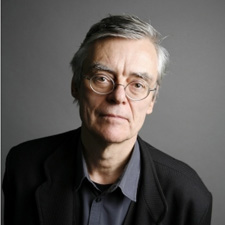
François Schuiten

Vice-president & co-founder

Artist and scenographer

A Flauta MГЎgica

Mehdi Tayoubi

President & co-founder

Innovation Strategist

A Flauta MГЎgica

Hany Helal

Vice-president & co-founder

Professor, Faculty of Engineering, Cairo University
Former Minister of Higher Education & Scientific Research

OUR PARTNERS

We thank our benefactors and partners for their support.

A Flauta MГЎgica
A Flauta MГЎgica
A Flauta MГЎgica
A Flauta MГЎgica
A Flauta MГЎgica
A Flauta MГЎgica
A Flauta MГЎgica
A Flauta MГЎgica
A Flauta MГЎgica
A Flauta MГЎgica
A Flauta MГЎgica
A Flauta MГЎgica
A Flauta MГЎgica
A Flauta MГЎgica
A Flauta MГЎgica
A Flauta MГЎgica
A Flauta MГЎgica

OUR SCIENTIFIC PARTNERS

180
A Flauta MГЎgica
A Flauta MГЎgica
A Flauta MГЎgica
A Flauta MГЎgica
A Flauta MГЎgica
A Flauta MГЎgica
A Flauta MГЎgica

Videos

ScanPyramids 2017 Video Report
ScanPyramids Big Void and ScanPyramids North Face Corridor
English Version

ScanPyramids Big Void and ScanPyramids North Face Corridor - English Version from HIP Institute on Vimeo.

Envisioning the future of VR
thanks to Egyptian Heritage
English Version

Envisioning the future of VR thanks to Egyptian Heritage - English Version from HIP Institute on Vimeo. A Flauta MГЎgica

ScanPyramids Q4 2015
Video Report

ScanPyramids in 2015... To be continued in 2016 from HIP Institute on Vimeo.

ScanPyramids Mission
Teaser
English Version

ScanPyramids Mission - Teaser English Version from HIP Institute on Vimeo.

ScanPyramids Mission
Teaser
Version française

ScanPyramids Mission Teaser Version française from HIP Institute on Vimeo.

A Flauta Mгўgica ❲1080p❳

Deeply influenced by Freemasonry, to which both Mozart and his librettist Emanuel Schikaneder belonged, the opera is steeped in symbolic rituals. The number three (three ladies, three boys, three chords) and the themes of silence, fire, and water are direct references to Masonic initiation.

Despite its high-minded ideals, the opera remains beloved because of its humanity. Papageno, who fails his trials and cares more for wine and a "Papagena" than for spiritual enlightenment, serves as a relatable foil to the heroic Tamino. He reminds the audience that while some strive for the divine, others find grace in the simple beauty of everyday life. Conclusion

"The Magic Flute" ( Die Zauberflöte ), premiered in 1791, stands as Wolfgang Amadeus Mozart’s final operatic triumph and perhaps his most enigmatic work. Combining elements of a fairy tale, a Masonic allegory, and a popular comedy, it transcends the boundaries of the Singspiel (a German form of music drama with spoken dialogue) to become a universal meditation on the human journey from darkness to light. A Fusion of Styles

The narrative arc represents the Enlightenment’s shift from superstition to reason. The Queen of the Night, initially perceived as a grieving mother, is revealed to represent the forces of darkness and irrationality. In contrast, Sarastro’s realm, though stern, represents wisdom, virtue, and the brotherhood of man. The "magic flute" itself acts as a symbol of the transformative power of art, capable of taming beasts and protecting the soul through its trials. The Human Element

Mozart’s genius lies in his ability to blend disparate musical styles. The Queen of the Night’s "Der Hölle Rache" is a masterclass in Italian opera seria virtuosity, while Papageno’s folk-like melodies represent the simple, earthy joys of the common man. Meanwhile, the solemn choruses of the priests reflect the dignity of the Enlightenment. Masonic Symbolism and Enlightenment

Contact Us

Drop us a line to get in touch and be part of the adventure.