Advances In Credit Risk Modelling And Corporate... May 2026
The following is an overview of the core themes and advancements to include in a paper titled This structure reflects recent shifts toward machine learning, the integration of alternative data, and the rising importance of climate-related financial risks. 1. Abstract
: Modern approaches now prioritize ensemble methods like Random Forests , XGBoost , and Gradient Boosting Machines (GBM) . These models excel at capturing non-linear relationships and high-dimensional interactions that traditional models miss.
: Techniques like Deep Belief Networks (DBN) and Neural Networks are increasingly used for large, heterogeneous datasets (e.g., transaction records and macroeconomic variables).
The landscape of credit risk and corporate finance has shifted from static, linear statistical models toward dynamic, AI-driven frameworks. This paper examines the integration of machine learning (ML), the role of alternative data in addressing "thin-file" borrowers, and the critical emergence of Environmental, Social, and Governance (ESG) factors in credit assessments. It highlights how these advances improve predictive accuracy by 10–25% while introducing new challenges in model interpretability and regulatory compliance. 2. Evolution of Modelling Techniques
A major advancement in corporate finance is the move beyond traditional "tradeline" data (credit scores, income, and liabilities). The Use of Alternative Data in Credit Risk Assessment
Historically, credit risk modelling relied on and Linear Discriminant Analysis (LDA) because of their interpretability and alignment with Basel regulatory rules.
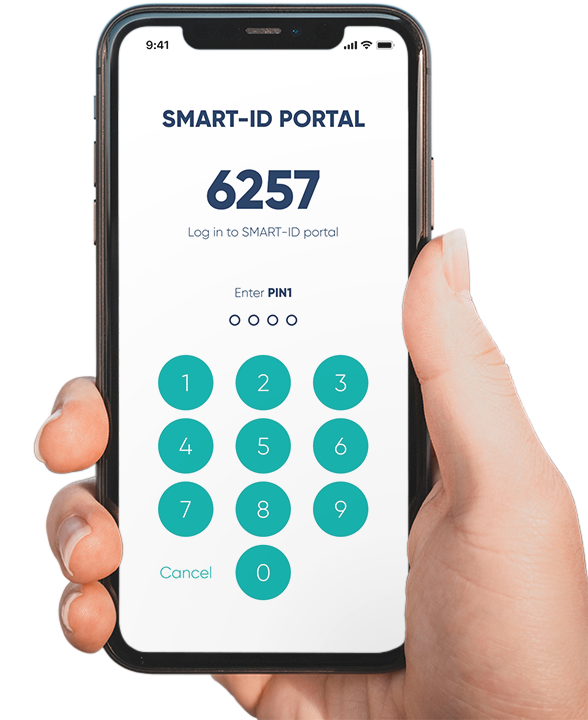
Estonia's Government’s e-services are implementing Smart-ID+ as the new standard authentication method. This makes communication with the state more secure, faster and more convenient.
Smart-ID's proven split key technology is heading to Armenia through a partnership between SK ID Solutions and local trust service provider imID. The collaboration brings Smart-ID's internationally recognized authentication and digital signing capabilities, already trusted by millions across the Baltics, to Armenian users.
The following is an overview of the core themes and advancements to include in a paper titled This structure reflects recent shifts toward machine learning, the integration of alternative data, and the rising importance of climate-related financial risks. 1. Abstract Advances in Credit Risk Modelling and Corporate...
: Modern approaches now prioritize ensemble methods like Random Forests , XGBoost , and Gradient Boosting Machines (GBM) . These models excel at capturing non-linear relationships and high-dimensional interactions that traditional models miss. The following is an overview of the core
The landscape of credit risk and corporate finance has shifted from static, linear statistical models toward dynamic, AI-driven frameworks. This paper examines the integration of machine learning (ML), the role of alternative data in addressing "thin-file" borrowers, and the critical emergence of Environmental, Social, and Governance (ESG) factors in credit assessments. It highlights how these advances improve predictive accuracy by 10–25% while introducing new challenges in model interpretability and regulatory compliance. 2. Evolution of Modelling Techniques
A major advancement in corporate finance is the move beyond traditional "tradeline" data (credit scores, income, and liabilities). The Use of Alternative Data in Credit Risk Assessment
Historically, credit risk modelling relied on and Linear Discriminant Analysis (LDA) because of their interpretability and alignment with Basel regulatory rules.
Achievements
2023
Obtained local qualified status for authentication in Latvia
In the TOP 10 most used apps in Lithuania
Most loved digital tool brand in Latvia
Recognised as the most loved digital tool brand in Latvia based on the Brand Capital survey.
Enables Apple Watch support
for electronic authentication and signing directly through the Apple Watch.
Now available in Belgium
2022
Smart-ID won joint 5th place as the most loved brand in Estonia
Smart-ID celebrates its 5th anniversary!
Smart-ID App user base grows to 3 274 621
Supports more than 700 e-services with authentication or for electronic document signing.
1500+ devices supported by Smart-ID app
Available platforms: App Store, Google Play, Huawei AppGallery.
Smart-ID app launched in India
App: Jio SecureID
2021
The most reliable authentication solution in Baltic countries.
International study by SK ID Solutions (e-identity solutions provider) highlights Smart-ID as the most reliable authentication solution in Baltics.
1 billion Smart-ID transactions made this year
Smart-ID app released for Huawei AppGallery
Smart-ID is now also available for download by Huawei smartphone users
Smart-ID app launched in Iceland
App: Audkenni
2020
Biometric registration method launched
Users can now register accounts by scanning their own travel documents.
State support for Smart-ID
All Estonian state services have full Smart-ID support and Smart-ID is used for age verification in Latvia.
Cloud signing
Adobe Acrobat Sign services now have Smart-ID support.
2019
Secure authentication recognised
Smart-ID authentication schema was evaluated as „level high” in Estonia and Smart-ID support is added to all state services.
Smart-ID app reaches 2 000 000 users
2018
Digital signatures
Becoming certified as QSCD means that signatures given with Smart-ID have the same legal standing as handwritten ones across European Union.
Breakthrough of the Year
Smart-ID wins ITL’s Breakthrough of the Year.
2017
Prestigious awards
Smart-ID wins Service of The Year from Lithunian Industry Confederation and Silver in Estonian Design awards.
Smart-ID launch and reaches at first year 300 000 users
Cookie warning
Cookies are used to ensure a more convenient user experience on the website. By continuing to use the website, you agree to the use of cookies.
Functional
Always active
The technical storage or access is strictly necessary for the legitimate purpose of enabling the use of a specific service explicitly requested by the subscriber or user, or for the sole purpose of carrying out the transmission of a communication over an electronic communications network.
Preferences
The technical storage or access is necessary for the legitimate purpose of storing preferences that are not requested by the subscriber or user.
Statistics
The technical storage or access that is used exclusively for statistical purposes.The technical storage or access that is used exclusively for anonymous statistical purposes. Without a subpoena, voluntary compliance on the part of your Internet Service Provider, or additional records from a third party, information stored or retrieved for this purpose alone cannot usually be used to identify you.
Marketing
The technical storage or access is required to create user profiles to send advertising, or to track the user on a website or across several websites for similar marketing purposes.
If you experience issues when logging in to Estonian state portals (e.g., Terviseportaal, Töötukassa, eesti.ee, Transport Administration, etc.), please check the following:
Make sure the latest version of the Smart-ID application is installed on your device (at least version 31.6). You can install the latest version from the App Store or Google Play Store.
Check that Google Chrome, Firefox or another supported browser is set as the default browser on your device. If the device manufacturer’s preinstalled browser is set as the default, authentication may not work properly.


 543 906users in Estonia
 981 192users in Latvia
 1 360 640users in Lithuania